Best, Richard K. “Dick” (1910-2001)
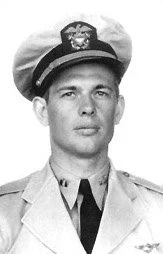
The Battle of Midway, was Richard Halsey “Dick” Best’s last combat action. During the morning mission, he inhaled caustic fumes from a faulty oxygen canister. Doctors later diagnosed him with tuberculosis. Best never flew again, and after more than two years of treatment, he retired from the Navy on medical disability in 1944.
After the war, Best settled in Santa Monica, California, and worked for Douglas Aircraft. He went on to manage security at the RAND Corporation, retiring in 1975. Best died in Santa Monica on October 28, 2001, at age ninety-one and was buried at Arlington National Cemeter
Blamey, Sir Thomas (1884-1951)
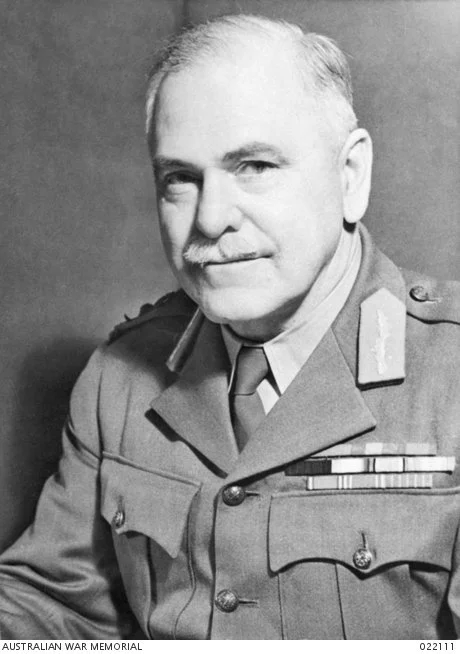
General Sir Thomas Blamey signed Japan’s formal surrender on behalf of Australia aboard USS Missouri in Tokyo Bay. He retired to Melbourne after the war, where he went into business, wrote, and worked to improve the welfare of Australian veterans. He also took an interest in the creation of the Australian National University.
On June 8, 1950, Blamey became the first and only Australian to attain the rank of field marshal. He was already gravely ill by the time Governor-General William McKell presented him with his marshal’s baton at his hospital bedside that September. Blamey died on May 27, 1951, at the Repatriation General Hospital in Heidelberg, Victoria, from a cerebral hemorrhage associated with high blood pressure. He was sixty-seven. An estimated quarter of a million people lined Melbourne’s streets for his state funeral.
Bong, Richard I. “Dick” (1920-1945)
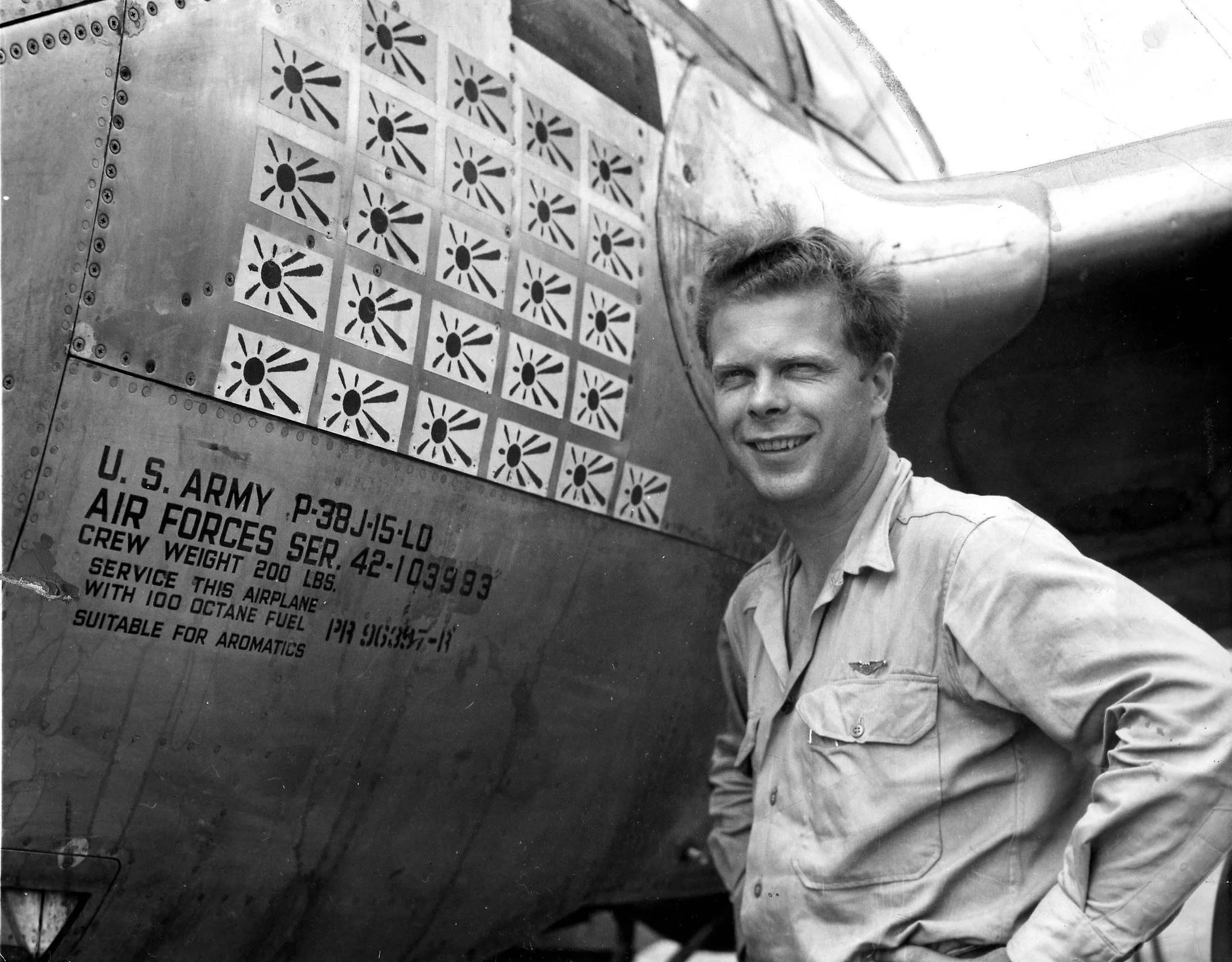
Though not mentioned in the book, P-38 jockey Major Richard Ira “Dick” Bong was not just the USAAF’s highest scoring flying ace of the war, but he is the United States’ top scoring fighter pilot of all time with 40 confirmed air victories. MacArthur personally presented him with the Medal of Honor in December 1944. He then rotated home, where Bong married Marjorie “Marge” Vattendahl and took up test flying. (His Lightning fighter was named “Marge” and featured her portrait as nose art.) Bong’s final assignment put him in the cockpit of one of America’s first jet fighters, the Lockheed P-80 Shooting Star.
On August 6, 1945, the day the atomic bomb fell on Hiroshima, Bong took off from Burbank, California, on a routine Army acceptance flight. The jet lost power shortly after takeoff. Bong bailed out at low altitude, but his parachute failed to open in time. He was twenty-four. He was buried in his hometown of Poplar, Wisconsin, before Japan formally surrendered.
Boyington, Gregory “Pappy” (1912-1988)
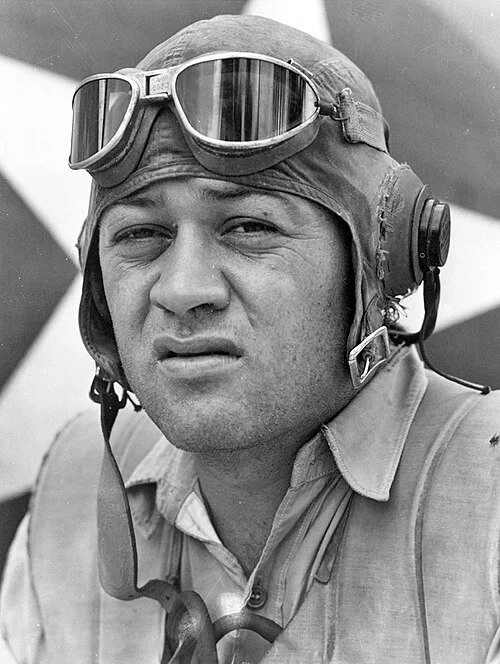
Though not mentioned in the book, Greg Boyington, called “Pappy” by the media (“Gramps” by his pilots) for his thirty years, was the US Marine Corps’ leading flying ace. A hard-drinking, hard fighting fighter jock, Boyington’s squadron “The Black Sheep” (VMF-214) was one of the most successful units in the USMC. Shot down over Rabaul after scoring two more kills to bring his tally to 28, he was subsequently captured and spent the last twenty months of the war as a Japanese prisoner. Declared Missing In Action, the Marines awarded him the Medal of Honor (presumed posthumously). President Harry Truman presented it to him at the White House after his return. Boyington retired from the Marine Corps in 1947 with the rank of colonel.
In 1958, Boyington published Baa Baa Black Sheep, a bestselling memoir about his years with the Flying Tigers in China and the Black Sheep Squadron in the Solomons. The book later inspired the television series starring Robert Conrad, bringing Boyington’s story to a new generation. He died of cancer on January 11, 1988, at a hospice in Fresno, California. He was seventy-five and was buried with full military honors at Arlington National Cemetery. Idaho’s Coeur d'Alene Airport / Pappy Boyington Field is named in his honor.
Edson, Merritt A. “Red Mike” (1897-1955)
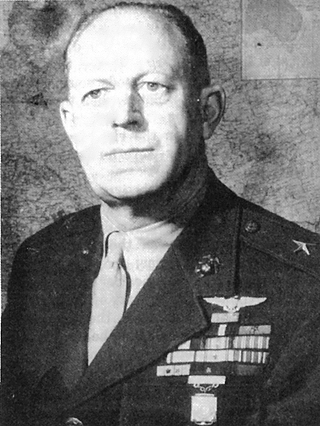
Edson, who earned the Medal of Honor on Guadalcanal, spent his last years in uniform defending the Marine Corps’ role as Congress debated unifying the armed services. He retired in 1947 as a major general and returned to his native Vermont, where he became the state’s first commissioner of public safety and organized the Vermont State Police.
In 1951, Edson returned to Washington as executive director of the National Rifle Association. He also served as president of the Marine Corps War Memorial Foundation and, in 1955, joined a Defense Department committee that helped draft a code of conduct for American service members taken prisoner. Edson died by suicide from carbon monoxide poisoning on August 14, 1955, at his home in Washington, D.C. He was fifty-eight and was buried at Arlington National Cemetery
Eichelberger, Robert L. (1886-1961)
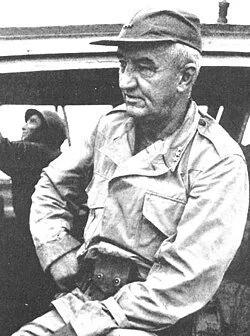
Following Japan’s surrender, General Robert L. Eichelberger, one of Douglas MacArthur’s most effective and dependable battlefield commanders, assumed a central role in the American occupation of Japan. As commander of the Eighth Army, he oversaw the military forces responsible for maintaining order and implementing occupation policies throughout much of the defeated nation. His administrative abilities proved as valuable in peacetime as his battlefield leadership had during the war. Eichelberger retired from active duty in 1948 after nearly four decades of military service, settling with his wife, Em, in Asheville, North Carolina. In 1950, he published his wartime memoir, Our Jungle Road to Tokyo, recounting his campaigns from the brutal fighting at Buna through the liberation of the Philippines. During the Korean War, he briefly served as a consultant to the secretary of the Army on Far Eastern affairs. In 1954, Congress recognized his distinguished service by promoting him to the rank of full general on the retired list.
Unlike his flamboyant superior MacArthur, or headline-grabbing ETO counterpart Patton, Eichelberger never became a household name, despite his considerable contributions to the Allied victory in the Pacific. He remained active in retirement, writing, lecturing, and participating in civic affairs. On September 26, 1961, Eichelberger died in Asheville at the age of seventy-five from pulmonary complications that developed into pneumonia following surgery. He was buried at Arlington National Cemetery. Upon learning of his death, MacArthur praised him as one of the Army’s most brilliant commanders and acknowledged the vital role his Eighth Army had played in defeating Japan. Eichelberger's legacy remains that of a capable, courageous, and frequently overlooked commander whose victories helped make MacArthur’s celebrated return to the Philippines possible.
Fletcher, Frank Jack “Black Jack” (1885-1973)
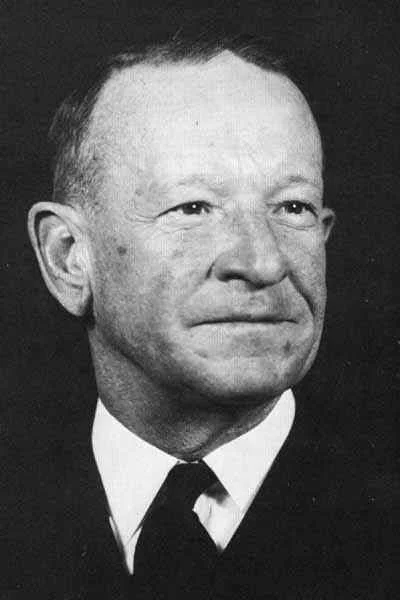
Vice Admiral Frank Jack Fletcher, who had commanded American carrier forces at Coral Sea and Midway, ended the war in charge of the North Pacific Force. After Japan’s surrender, his command helped occupy northern Japan. Fletcher returned to Washington in 1946 to serve on the Navy’s General Board, becoming its chairman before retiring in 1947 with the rank of admiral.
Fletcher spent much of his retirement at his estate in Maryland. He died on April 25, 1973, at the Bethesda Naval Hospital at age eighty-seven. He was buried at Arlington National Cemetery.
Fuchida Mitsuo (1902-1976)
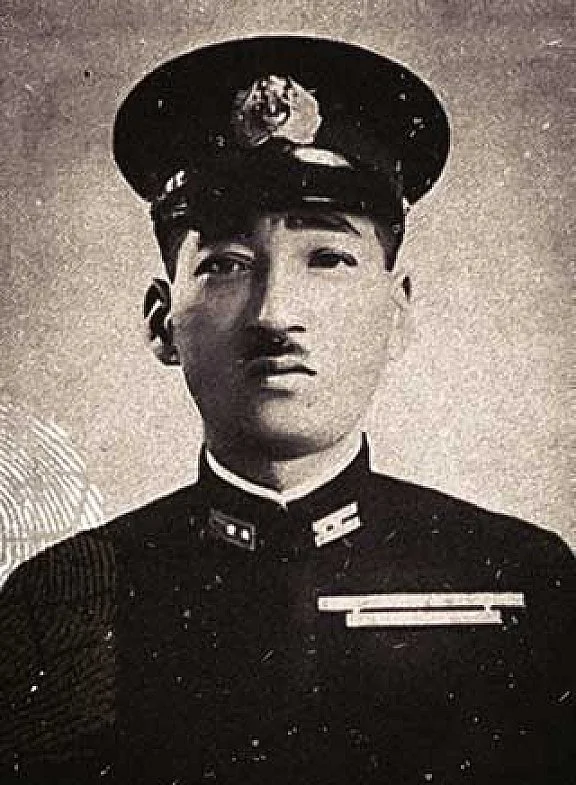
After Japan’s surrender, Fuchida took up farming near Osaka. He later read a pamphlet by Jacob DeShazer, a Doolittle Raider who had endured years in Japanese captivity, embraced Christianity in prison, and returned to Japan as a missionary. DeShazer’s account of forgiving his captors led Fuchida to read the Bible. He converted to Christianity in 1950 and sought DeShazer out in person. The two became friends.
Fuchida spent much of the rest of his life preaching in Japan and North America, drawing on his own experience to speak about forgiveness and reconciliation. He told the story of his conversion in From Pearl Harbor to Calvary and continued to write and give interviews about his wartime service. He died on May 30, 1976, at age seventy-three, reportedly from complications of diabetes.
Halsey, William F. “Bull” (1882-1959)
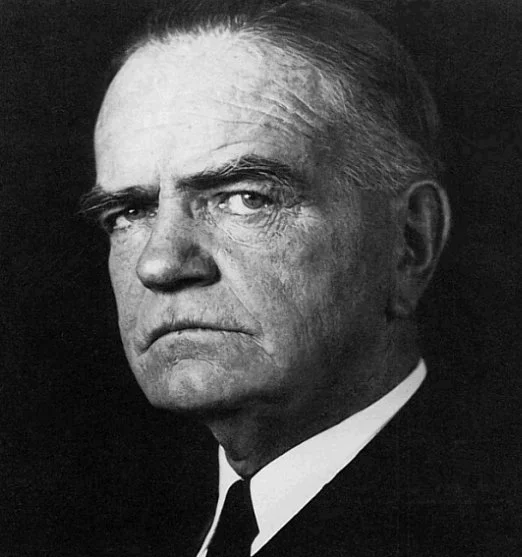
After witnessing Japan’s surrender aboard his flagship, USS Missouri, Admiral William “Bull” Halsey brought the Third Fleet home to the West Coast. He relinquished command in November 1945 and received his fifth star the following month, becoming the last of the Navy’s four fleet admirals. He left active duty in 1947, the same year he published Admiral Halsey’s Story, a memoir written with J. Bryan III.
Halsey served on corporate boards in civilian life, though declining health curtailed his public activities. On August 16, 1959, he died of a heart attack on Fishers Island, New York, at age seventy-six. His funeral was held at Washington National Cathedral, and he was buried at Arlington National Cemetery
Hirohito (1901-1889)
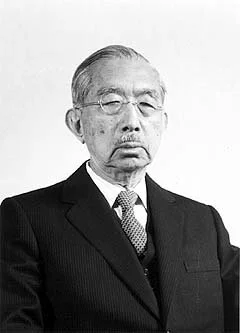
Emperor Hirohito remained on the throne after Japan’s surrender. MacArthur believed the emperor could help keep Japan stable during the Allied occupation, and his administration kept Hirohito out of the Tokyo war crimes trials. Japan’s new constitution, which took effect in 1947, vested sovereignty in the Japanese people and made the emperor a symbol of the state, with largely ceremonial duties.
Hirohito remained emperor as Japan rebuilt and became one of the world’s largest economies. In 1975, he made a state visit to the United States, where he was received at the White House by President Gerald Ford. Hirohito died in Tokyo on January 7, 1989, of cancer of the duodenum. He was eighty-seven and had reigned for sixty-two years. His eldest son, Akihito, succeeded him.
Homma Masaharu (1887-1946)
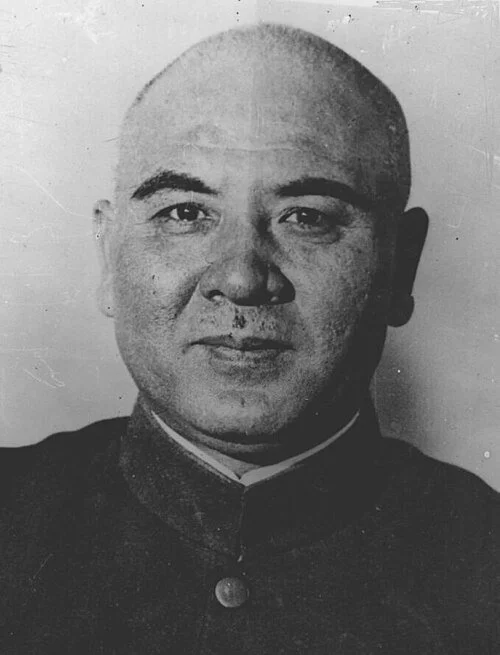
After Japan’s surrender, American authorities brought Lieutenant General Masaharu Homma to trial in Manila, the city his forces had captured four years earlier. The military commission heard charges arising from the Bataan Death March, the mistreatment of prisoners of war, and the bombing of Manila after it had been declared an open city. Homma maintained that he had neither known of nor condoned the atrocities. On February 11, 1946, the commission found him guilty of failing to control the troops under his command and sentenced him to death.
That same day, the U.S. Supreme Court rejected Homma’s petition by a vote of six to two, citing its decision in the Yamashita case. General Douglas MacArthur confirmed the death sentence and ordered that Homma be shot. On April 3, 1946, an American firing squad executed him at Los Baños, south of Manila, where Yamashita had been hanged less than six weeks earlier.
Hyakutake Harukichi (1888-1947)
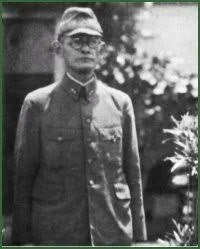
Lieutenant General Harukichi Hyakutake, who had commanded Japan’s Seventeenth Army during the Guadalcanal campaign, suffered a debilitating stroke on Bougainville in the final months of the war. Lieutenant General Kanda Masatane took over his command, and Hyakutake remained in the islands after Japan surrendered. In November 1945, an Australian Army photographer found him bedridden in a hospital on Fauro Island, where Japanese troops had been gathered under Australian supervision.
Hyakutake returned to Japan in February 1946 and began writing his account of the Guadalcanal campaign. His health deteriorated before he could finish it. He died on March 10, 1947, at age fifty-eight.
Kase Toshikazu (1903-2004)
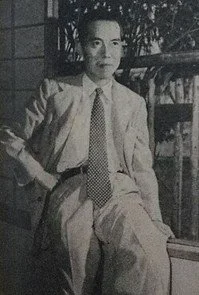
Kase Toshikazu, who accompanied Foreign Minister Shigemitsu Mamoru aboard USS Missouri on September 2, 1945, lived to see Japan’s fortunes transformed. In 1950, he published Journey to the Missouri, an account of the events that had brought his country to surrender. Five years later, he became Japan’s ambassador and permanent observer to the United Nations, representing a nation still seeking admission to the international organization. The diplomat who had stood among the defeated now helped seek a place for Japan in the postwar world.
Kase died in Kamakura on May 21, 2004, aged 101, nearly fifty-nine years after the surrender ceremony. He had witnessed imperial Japan’s collapse and lived through its reconstruction as a peaceful economic power and American ally. For the man who had watched his country surrender from the deck of an American battleship, the following decades revealed how much a defeated nation’s future could differ from its darkest hour.
Kenney, George C. (1889-1977)
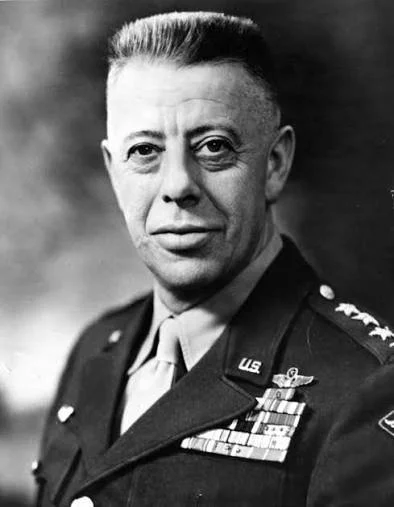
After directing Douglas MacArthur’s air campaign in the Southwest Pacific, General George C. Kenney served as the senior American member of the United Nations Military Staff Committee. In 1946, he became the first commander of Strategic Air Command. Curtis LeMay succeeded him in 1948, and Kenney went on to lead Air University at Maxwell Air Force Base in Alabama until his retirement in 1951.
Kenney published his account of the Pacific air war in 1949 as General Kenney Reports. In retirement, he wrote books about MacArthur, Paul “Pappy” Gunn, and the fighter ace Dick Bong. He also served as president of the Air Force Association. On August 9, 1977, Kenney died of a heart attack at his home in Bay Harbor Islands, Florida. He was eighty-eight.
King, Earnest J. (1878-1956)
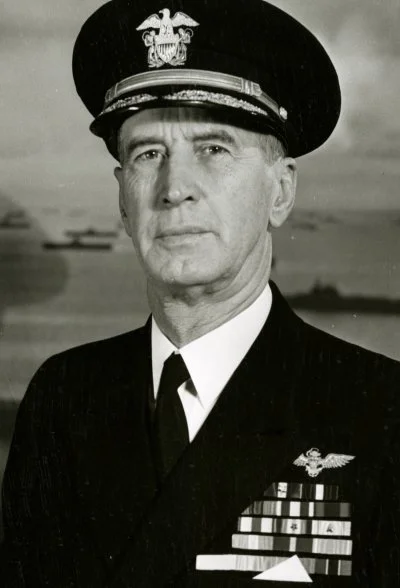
Fleet Admiral Ernest J. King had held two jobs during the Second World War, serving as both commander in chief of the U.S. Fleet and chief of naval operations. The Navy abolished the fleet commander’s post in October 1945, and Chester Nimitz succeeded King as chief of naval operations that December. King continued to advise the secretary of the Navy and served as president of the Naval Historical Foundation.
A stroke in 1947 curtailed King’s activities, but he went on to work with historian Walter Muir Whitehill on Fleet Admiral King: A Naval Record, published in 1952. King died on June 25, 1956, at the Portsmouth Naval Hospital, reportedly of a heart attack. He was seventy-seven and was buried at the US Naval Academy Cemetery in Annapolis.
Kleiss, Norman Jack “Dusty”
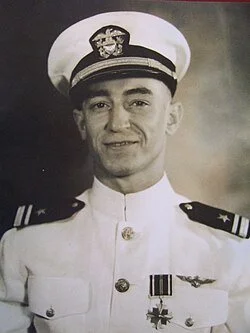
Norman Jack “Dusty” Kleiss, the Enterprise dive-bomber pilot who earned the Navy Cross at Midway, stayed in the Navy after the war. He taught at the California Institute of Technology, served in the Navy’s Bureau of Aeronautics, and joined the Atlantic Fleet staff before retiring as a captain in 1962. He went on to work in the aerospace industry and later taught math and science at a high school in West Virginia.
In his later years, Kleiss spoke about Midway but preferred to draw attention to the torpedo crews who had gone in ahead of the dive-bombers and suffered devastating losses. He told his own story with historians Timothy and Laura Orr in Never Call Me a Hero, a memoir published in 2017 for the battle’s seventy-fifth anniversary. Kleiss died in San Antonio on April 22, 2016, at the age of 100. He was buried beside his wife, Jean, at Fort Sam Houston National Cemetery.
Krueger, Walter (1881-1967)
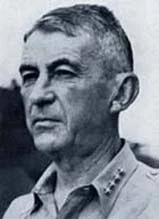
Following Japan’s surrender, General Walter Krueger, commander of the Sixth Army and one of Douglas MacArthur’s most accomplished subordinates, briefly oversaw American occupation forces in Japan. When the Sixth Army was deactivated in January 1946, Krueger prepared for retirement, formally leaving active service that July after an extraordinary forty-eight-year military career. Born in Germany, he had entered the United States Army as a private during the Spanish-American War and risen through the ranks to become a four-star general, a remarkable achievement. Settling in San Antonio, Texas, he devoted much of his retirement to military history and writing. In 1953, he published From Down Under to Nippon, his account of the Sixth Army’s campaigns across the Southwest Pacific. Although his cautious, methodical approach sometimes contrasted with MacArthur’s more aggressive instincts, Krueger’s organizational abilities and tactical judgment had proved indispensable to the Allied advance through New Guinea and the Philippines
Krueger’s retirement was marked by family difficulties, the death of his wife, Grace, in 1956, and progressively declining health. Nevertheless, he maintained an interest in military affairs and occasionally reunited with former comrades. Despite commanding one of the largest American field armies in the Pacific, he never achieved the public celebrity enjoyed by MacArthur, Eisenhower, or Patton. MacArthur, however, held him in exceptionally high regard, declaring that he knew of no superior army commander in American military history. On August 20, 1967, Krueger died of pneumonia at Valley Forge General Hospital in Pennsylvania at the age of eighty-six. He was buried with military honors at Arlington National Cemetery. His legacy remains that of a disciplined, meticulous professional soldier whose steady leadership transformed MacArthur’s strategic ambitions into battlefield victories and whose contributions to the defeat of Japan deserve considerably greater recognition..
Kurita Takeo(1889-1977)
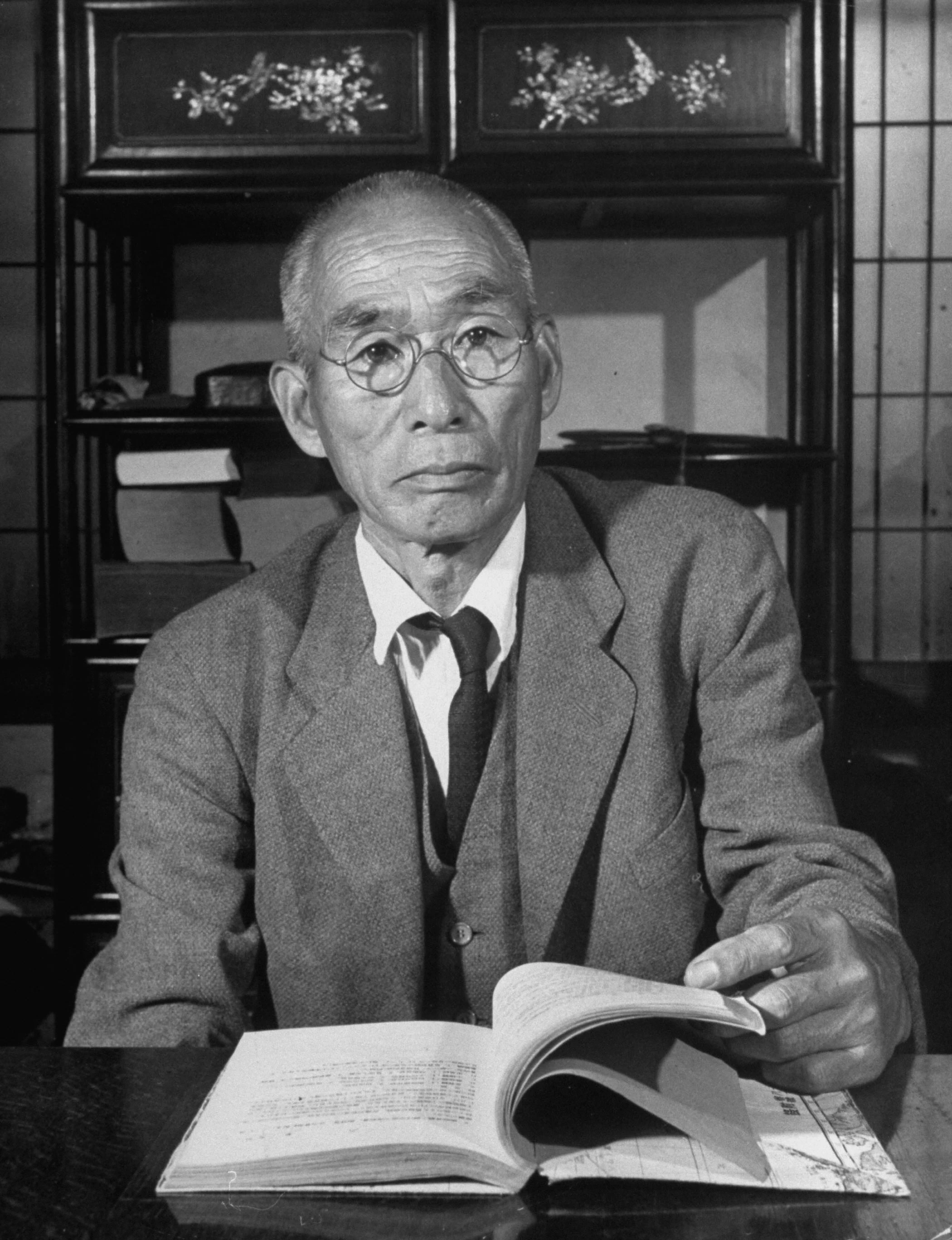
Vice Admiral Kurita Takeoended the war as commandant of the Imperial Japanese Naval Academy and retired in October 1945. The surviving occupation records give no indication that Allied authorities ever seriously considered prosecuting Kurita for war crimes. When American naval officers questioned him in October 1945, they did so for the US Strategic Bombing Survey, asking him about his decisions at the Philippine Sea and Leyte Gulf.
Kurita lived quietly with his daughter and her family and rarely spoke publicly about the war. Late in life, he told his biographer, Jiro Ooka, that he had believed Japan was already beaten and saw little point in sacrificing his crews in a futile attack. Kurita died on December 19, 1977, at age eighty-eight. He was buried at Tama Cemetery in Fuchū, Tokyo.
Laurel y García, José Paciano (1891 –1959)
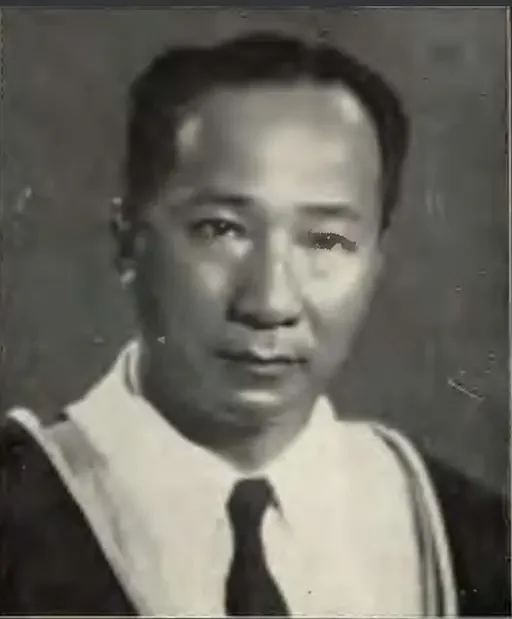
When Japan surrendered in 1945, José P. Laurel, who had presided over the Japanese-sponsored Philippine republic, was in Japan. American occupation authorities held him at Sugamo Prison in Tokyo, where he began writing his wartime memoirs. Returned to the Philippines in 1946 to face treason charges, Laurel was spared a verdict when President Manuel Roxas granted amnesty to accused wartime collaborators in 1948.
Laurel returned to politics and challenged President Elpidio Quirino in the disputed 1949 election. He lost that race, but two years later he drew more votes than any other candidate for the Philippine Senate and served until 1957. During his term, he led the Philippine delegation that negotiated the Laurel–Langley Agreement, which revised the trade terms with the United States established under Roxas. Laurel died in Manila on November 6, 1959, at age sixty-eight, after suffering a stroke and a heart attack.
Layton, Edwin T. (1903-1964)
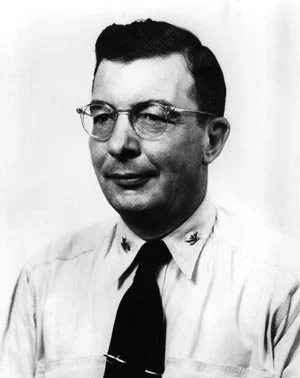
Edwin T. Layton, the Pacific Fleet intelligence officer who helped anticipate Japan’s attack on Midway, remained in the Navy after the war. He returned to intelligence duty in the Far East during the opening months of the Korean War and later became deputy director for intelligence on the Joint Chiefs of Staff. He finished his Navy career as director of the Naval Intelligence School, retiring as a rear admiral in 1959. He then returned to Tokyo to oversee Northrop’s Far Eastern operations.
In retirement, Layton set down his account of two very different episodes in naval intelligence: the surprise at Pearl Harbor and the codebreaking that helped the Navy prepare for Midway. He died in Monterey, California, on April 12, 1984, at age eighty-one. Roger Pineau and John Costello completed the book from his manuscript and notes, and it appeared the following year as And I Was There: Pearl Harbor and Midway—Breaking the Secrets.
LeMay, Curtis E. (1906-1990)
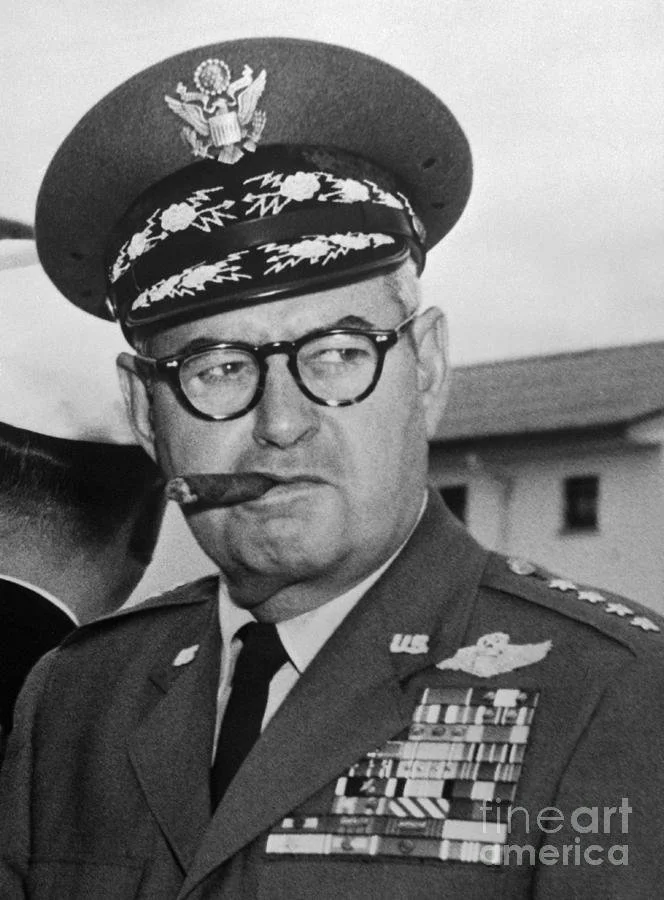
Curtis LeMay, who had directed the B-29 bombing campaign against Japan, was commanding US Air Forces in Europe when the Soviets blockaded West Berlin in 1948. He helped organize the airlift that kept the city supplied, then succeeded George Kenney as head of Strategic Air Command. Over the next nine years, he built SAC into the backbone of America’s nuclear deterrent. He became Air Force chief of staff in 1961 and held that post through the Cuban Missile Crisis before retiring in 1965.
In 1968, LeMay returned to the public eye as the vice-presidential running mate of Alabama governor George Wallace on the American Independent Party ticket. His remarks about the possible use of nuclear weapons on NOrth Vietnam, offering that we should “bomb them back into the stone age” drew controversy during the campaign. “Bombs Away” LeMay died of a heart attack on October 1, 1990, at the hospital at March Air Force Base near Riverside, California. He was eighty-three.
MacArthur, Douglas A. (1880-1964)
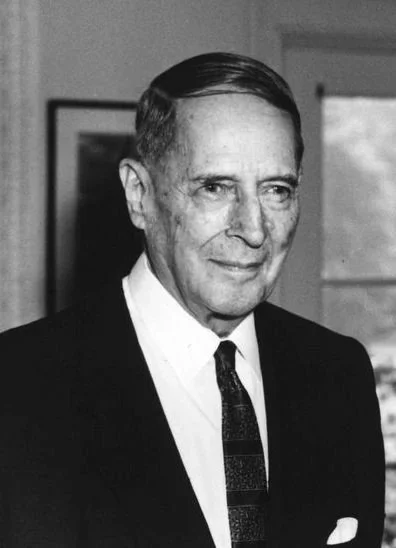
After accepting Japan’s formal surrender aboard USS Missouri on September 2, 1945, Douglas MacArthur remained in Tokyo to oversee the Allied occupation. Under his supervision, Japan adopted a new constitution, carried out sweeping land reforms, and stripped the emperor of his governing power. When North Korea invaded South Korea in June 1950, MacArthur took command of United Nations forces. His landing at Inchon in September reversed the course of the war, but China’s intervention later that year drove his forces back. MacArthur called for expanding the war to China and publicly challenged the Truman administration’s policy of keeping the conflict limited. In April 1951, President Harry S. Truman relieved him of command.
MacArthur returned to the United States to a hero’s welcome and told a joint meeting of Congress that “old soldiers never die. They just fade away.” He settled in New York and made one of his last major public appearances at West Point in 1962, where he delivered his “Duty, Honor, Country” address to the cadets. On April 5, 1964, MacArthur died at Walter Reed Army Medical Center in Washington, D.C., of liver and kidney failure following a series of operations. He was eighty-four. He was laid to rest at the MacArthur Memorial in Norfolk, Virginia, his mother’s hometown.
Marshall, George C. (1880-1959)
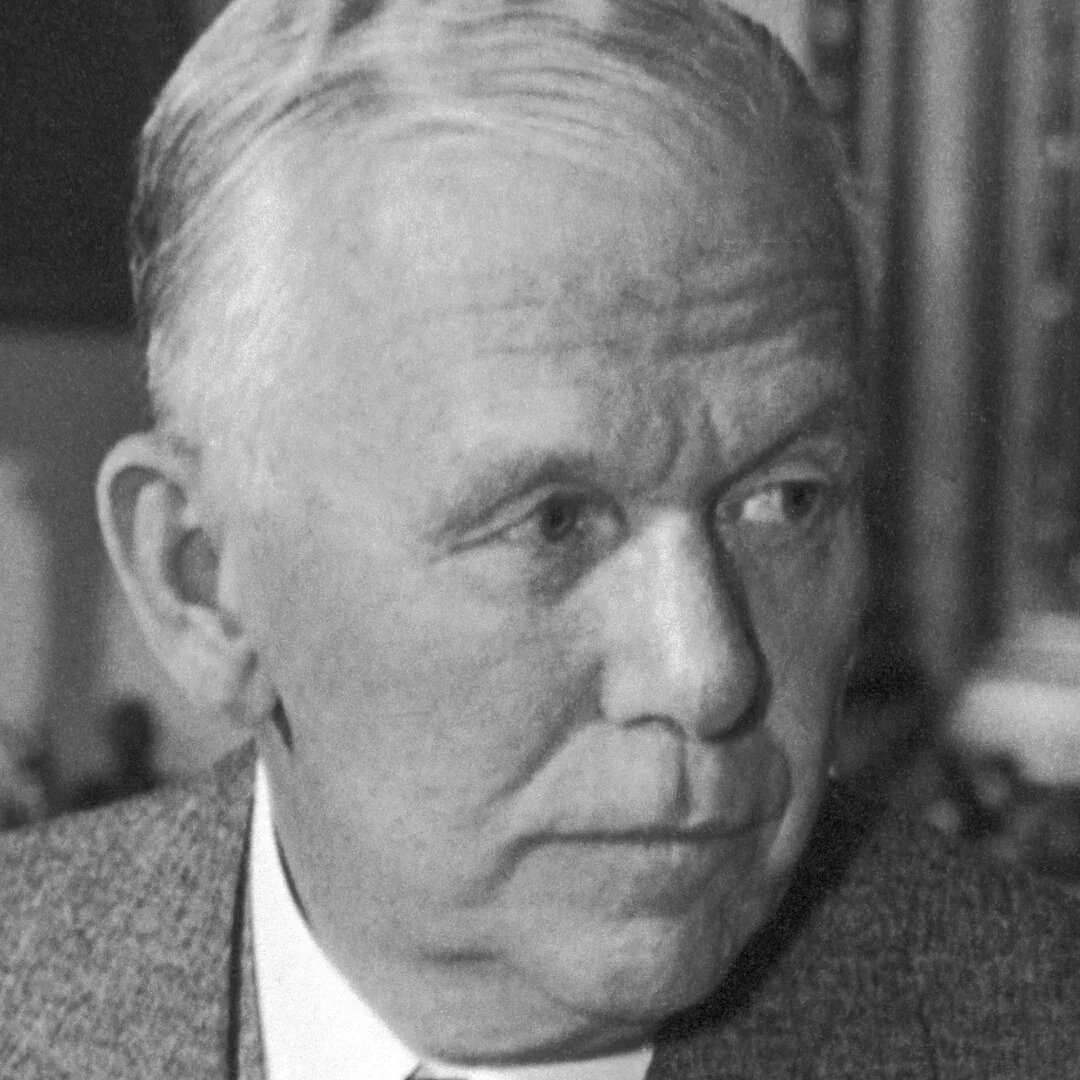
After stepping down as Army chief of staff in November 1945, General George C. Marshall went to China as President Harry Truman’s special envoy. He brokered a temporary truce between Chiang Kai-shek’s Nationalists and Mao Zedong’s Communists, but the country slid back into civil war. As secretary of state from 1947 to 1949, Marshall proposed the program of American aid that helped rebuild Western Europe. It became known as the Marshall Plan.
Marshall returned to Truman’s cabinet in 1950 as secretary of defense and helped oversee the American military buildup during the first year of the Korean War. He stepped down in 1951 and received the Nobel Peace Prize in 1953 for his role in Europe’s recovery. After suffering a series of strokes, Marshall died at Walter Reed Army Hospital in Washington, D.C., on October 16, 1959. He was seventy-eight and was buried at Arlington National Cemetery.
McCampbell, David (1910-1996)
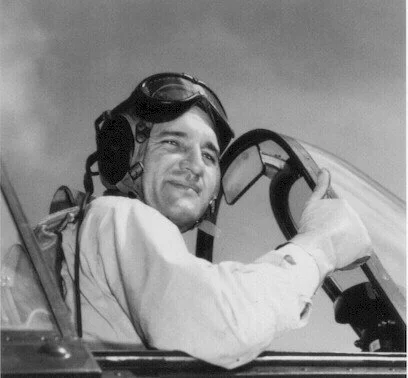
David McCampbell ended World War II as the U.S. Navy’s leading fighter ace, with thirty-four aerial victories and a Medal of Honor. He stayed in the Navy after the war, going from commanding the air group aboard USS Essex to commanding a carrier of his own, USS Bon Homme Richard. He also served on the staff of the Joint Chiefs of Staff before retiring as a captain in 1964.
McCampbell died on June 30, 1996, at a nursing home in Riviera Beach, Florida. He was eighty-six. His obituary gave no cause of death. He was buried at Arlington National Cemetery, and in 2002 the Navy commissioned the guided-missile destroyer USS McCampbell in his honor.
Mikawa Gunichi (1888-1981)
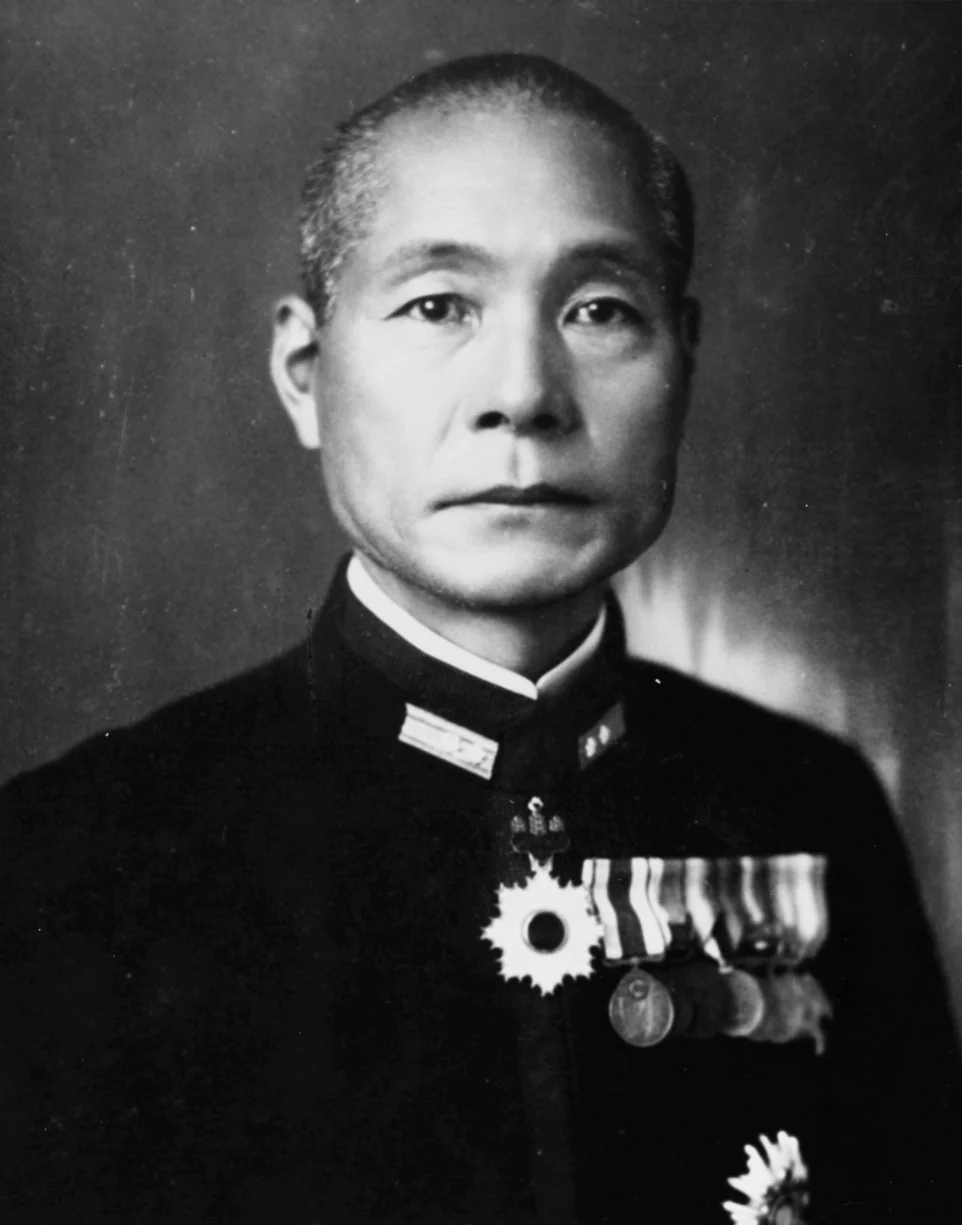
Vice Admiral Mikawa Gunichi, who led the Japanese cruiser force that defeated the Allies off Savo Island, returned to Japan after the Battle of Leyte Gulf and left active duty in May 1945, three months before Japan announced its surrender. Allied investigators questioned him that November. Occupation records show that he was later held at Sugamo Prison in Tokyo as a suspected war criminal.
After his release, Mikawa lived quietly with his family in Japan. He lived long enough to see the attack on Pearl Harbor dramatized in the 1970 film Tora! Tora! Tora!, in which the Japanese actor Fujio Suga played him. Mikawa died in Ikoma, Nara Prefecture, on February 25, 1981, at age ninety-two. A Japanese biographical account attributes his death to age-related decline.
Mitscher, Marc A. (1887-1947)
Marc Mitscher survived the Pacific’s carrier battles but had little time to enjoy the peace he had helped secure. In July 1945, he returned to Washington as Deputy Chief of Naval Operations for Air. Promoted to full admiral in March 1946, he took command of the Eighth Fleet, then became commander in chief of the Atlantic Fleet that September. The naval aviator whose wartime reputation had been forged in the Pacific finished his career overseeing American naval power in the Atlantic.
His final command lasted less than five months. On February 3, 1947, Mitscher died at the naval hospital in Norfolk, Virginia, from coronary thrombosis following a heart attack. He had turned sixty just eight days earlier. Buried with full military honors at Arlington National Cemetery, he never reached retirement. Two successive American warships would carry his name.
Nimitz, Chester W. (1885-1966)
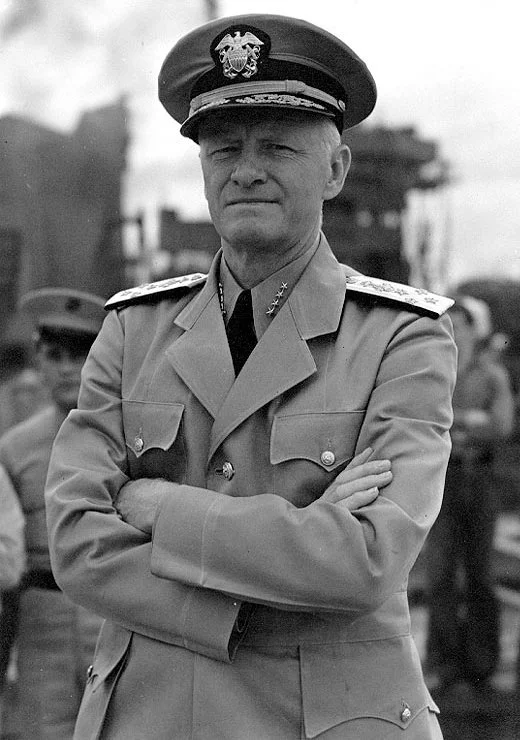
Three months after signing Japan’s surrender on behalf of the United States aboard the USS Missouri, Fleet Admiral Chester W. Nimitz succeeded Ernest J. King as chief of naval operations. From December 1945 to December 1947, he oversaw the Navy’s rapid demobilization while keeping enough ships and crews in service to support the occupation of Japan and meet American commitments around the world. By the time he left the post, the Navy he had helped bring home from one war was preparing for the demands of the Cold War.
Nimitz settled in the San Francisco Bay Area, where he served on the University of California’s Board of Regents and coauthored Sea Power: A Naval History with historian E. B. Potter. In January 1966 he suffered a stroke and developed pneumonia. He died from complications of the stroke on February 20, 1966, four days shy of his eighty-first birthday. At his request, he was buried at Golden Gate National Cemetery in San Bruno, California, among men who had served with him. The modern nuclear carrier USS Nimitz is named in his honor and is the namesake of its class of warship.
Ozawa Jisaburo (1886-1966)
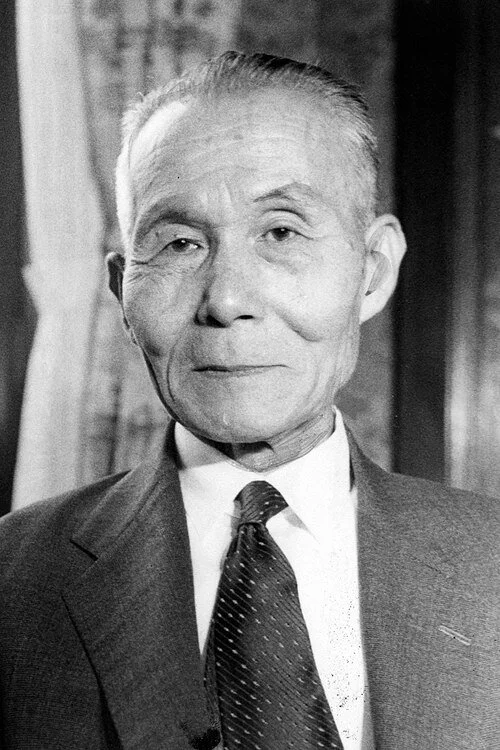
Vice Admiral Ozawa Jisaburo was the last commander of Japan’s Combined Fleet. After the surrender, he went into the naval reserve and sat for interviews with the U.S. Strategic Bombing Survey. He explained the gamble he had been asked to take at Leyte Gulf: use his carriers as bait to compel Halsey to abandon the San Bernardino Stait at Leyte (which he accomplished). Ozawa told his interrogators that he had doubted the decoy would work but saw little choice except to try.
In 1955, Ozawa became an adviser to Japan’s Defense Agency and helped compile its official war histories. He died on November 9, 1966, at age eighty. Japanese accounts attribute his death to multiple sclerosis.A Naval History with historian E. B. Potter. In January 1966 he suffered a stroke and developed pneumonia. He died from complications of the stroke on February 20, 1966, four days shy of his eighty-first birthday. At his request, he was buried at Golden Gate National Cemetery in San Bruno, California, among men who had served with him.
Roxas, Manuel Acuña (1892-1948)
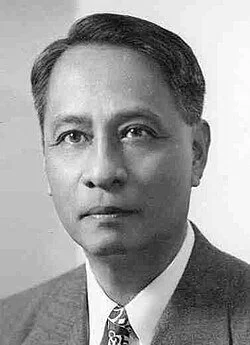
Manuel Roxas emerged from the Japanese occupation with a disputed wartime record. He had served in the Japanese-sponsored government of José P. Laurel while secretly maintaining contact with Allied intelligence. With Douglas MacArthur’s backing, Roxas defeated incumbent Sergio Osmeña in the April 1946 election and took office in May as the last president of the Philippine Commonwealth. On July 4, when the United States formally recognized Philippine independence, he became the first president of the Third Philippine Republic.
Roxas took charge of a country still rebuilding from the war and kept it closely tied to the United States. He backed a controversial constitutional amendment granting Americans equal rights to exploit Philippine natural resources and signed a 1947 agreement allowing the United States to retain military bases in the islands. On April 15, 1948, hours after delivering a speech at Clark Field reaffirming the alliance, Roxas died of a heart attack at age fifty-six. Vice President Elpidio Quirino succeeded him
Sakai Takeshi (1887-1946)
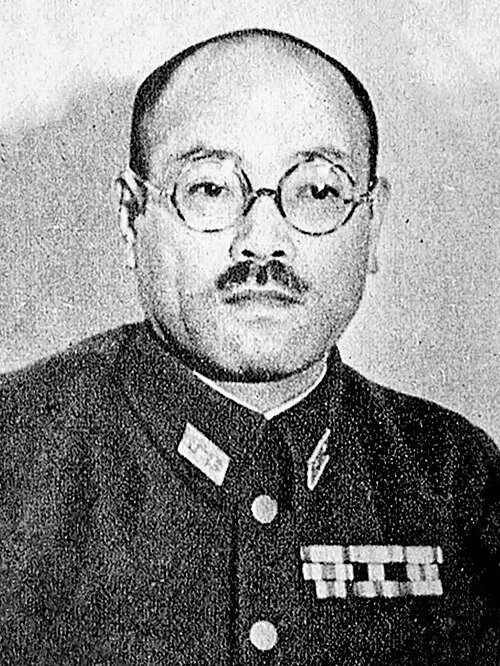
After Japan’s surrender, American occupation authorities arrested Lieutenant Sakai and turned him over to Chinese authorities. In 1946 he became the first defendant tried by the Nanjing War Crimes Tribunal. The charges covered his role in Japan’s aggression against China as well as atrocities committed by troops under his command, including the killing of prisoners of war and civilians.
Sakai argued that he had acted on orders from his government and had been unaware of his troops’ crimes. The tribunal rejected his defense, found him guilty of crimes against peace, war crimes, and crimes against humanity, and sentenced him to death. He was executed by firing squad on September 30, 1946, at age fifty-eight.
Spruance, Raymond A. (1886-1969)
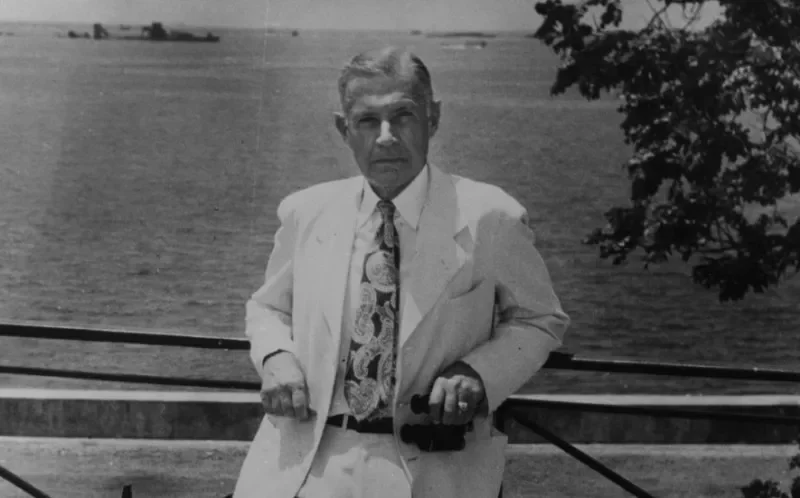
Admiral Spruance succeeded Nimitz as commander in chief of the Pacific Fleet in late 1945. He went on to serve as president of the Naval War College until his retirement in 1948. Four years later, President Harry Truman sent him back to the Philippines as U.S. ambassador. Spruance held the post from 1952 to 1955, during the years when Ramón Magsaysay rose to the Philippine presidency with American support.
After leaving Manila, Spruance returned to Pebble Beach, California, where he spent much of his retirement gardening and taking part in community affairs. He died there on December 13, 1969, at age eighty-three. His reported cause of death was arteriosclerosis. He was buried with full military honors at Golden Gate National Cemetery, near his wartime colleagues Chester Nimitz and Richmond Kelly Turner.
Thach, John S. “Jimmy” (1905-1981)
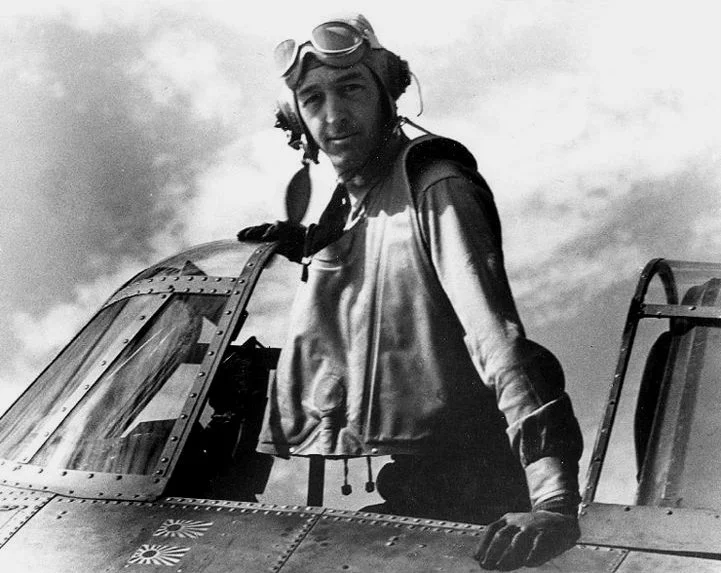
John “Jimmy” Thach, the Navy fighter pilot who devised the Thach Weave and used it at Midway, stayed in uniform after World War II. He commanded the escort carrier USS Sicily during the Korean War and later took command of USS Franklin D. Roosevelt. In 1958, he led Task Group Alfa, an Atlantic Fleet unit formed to develop better ways to hunt submarines. He finished his career as commander in chief of U.S. Naval Forces in Europe, retiring as a four-star admiral in 1967.
Thach died in Coronado, California, on April 15, 1981, four days before his seventy-sixth birthday. He was buried at Fort Rosecrans National Cemetery in San Diego. In 1984, the Navy commissioned the guided-missile frigate USS Thach in his honor.
Tojo Hideki (1884-1948)
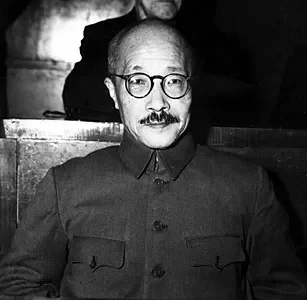
In September 1945, when American occupation forces arrived at his home to arrest him, Tojoshot himself in the chest. The bullet missed his heart, and American Army doctors saved his life. Tojo, who had been Japan’s prime minister from just before the attack on Pearl Harbor until July 1944, recovered and was put on trial before the International Military Tribunal for the Far East in Tokyo.
The tribunal found Tojo guilty on charges that included waging aggressive war and failing to prevent atrocities against prisoners of war and civilians. It sentenced him to death. On December 23, 1948, Tōjō and six other men condemned by the tribunal were hanged at Sugamo Prison in Tokyo. He was sixty-three, a week shy of his sixty-fourth birthday.
Toyoda Soemu (1885-1957)
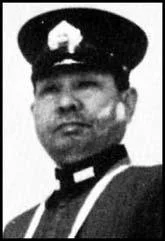
Admiral Toyoda Soemu, who had commanded the Combined Fleet at Leyte Gulf and ended the war as chief of Japan’s Naval General Staff, faced a war crimes tribunal in Tokyo in 1948. Prosecutors sought to hold him responsible for atrocities committed by Japanese naval personnel under his command. The tribunal examined whether Toyoda knew or should have known about the crimes and whether he had the authority to prevent them or punish those responsible. On September 6, 1949, it acquitted him on all counts.
After his acquittal, Toyoda wrote about his service in The Last Imperial Navy, his account of the navy’s final years. He died at his home in Tokyo on September 22, 1957, at age seventy-two. Accounts differ on the precise cause of death, citing either a heart attack or cardiac asthma.
Truman, Harry S. (1884-1972)
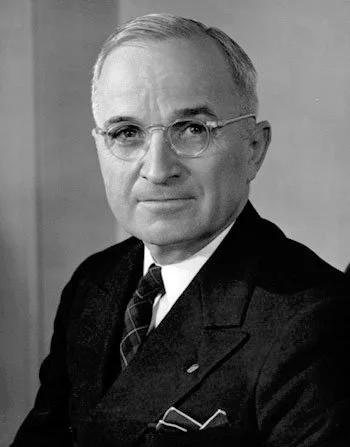
Japan’s surrender left the new President HarryTruman facing a new adversary in the Soviet Union. He pledged aid to Greece and Turkey under what became known as the Truman Doctrine, backed the Marshall Plan to rebuild Western Europe, and helped establish NATO. At home, he ordered the desegregation of the armed forces and won an upset victory over Thomas E. Dewey in 1948. When North Korea invaded South Korea in 1950, Truman committed American forces to the United Nations defense of the South. The following year, he relieved MacArthur after the general publicly challenged his policy of keeping the war limited to Korea.
Truman left office in January 1953 and returned with his wife, Bess, to Independence, Missouri. He wrote his memoirs and helped establish his presidential library there. In December 1972, he was hospitalized in Kansas City with a lung infection. He developed multiple organ failure and died on December 26 at age eighty-eight. He was buried on the grounds of his presidential library.
Turner, Richmond K. (1885-1961)
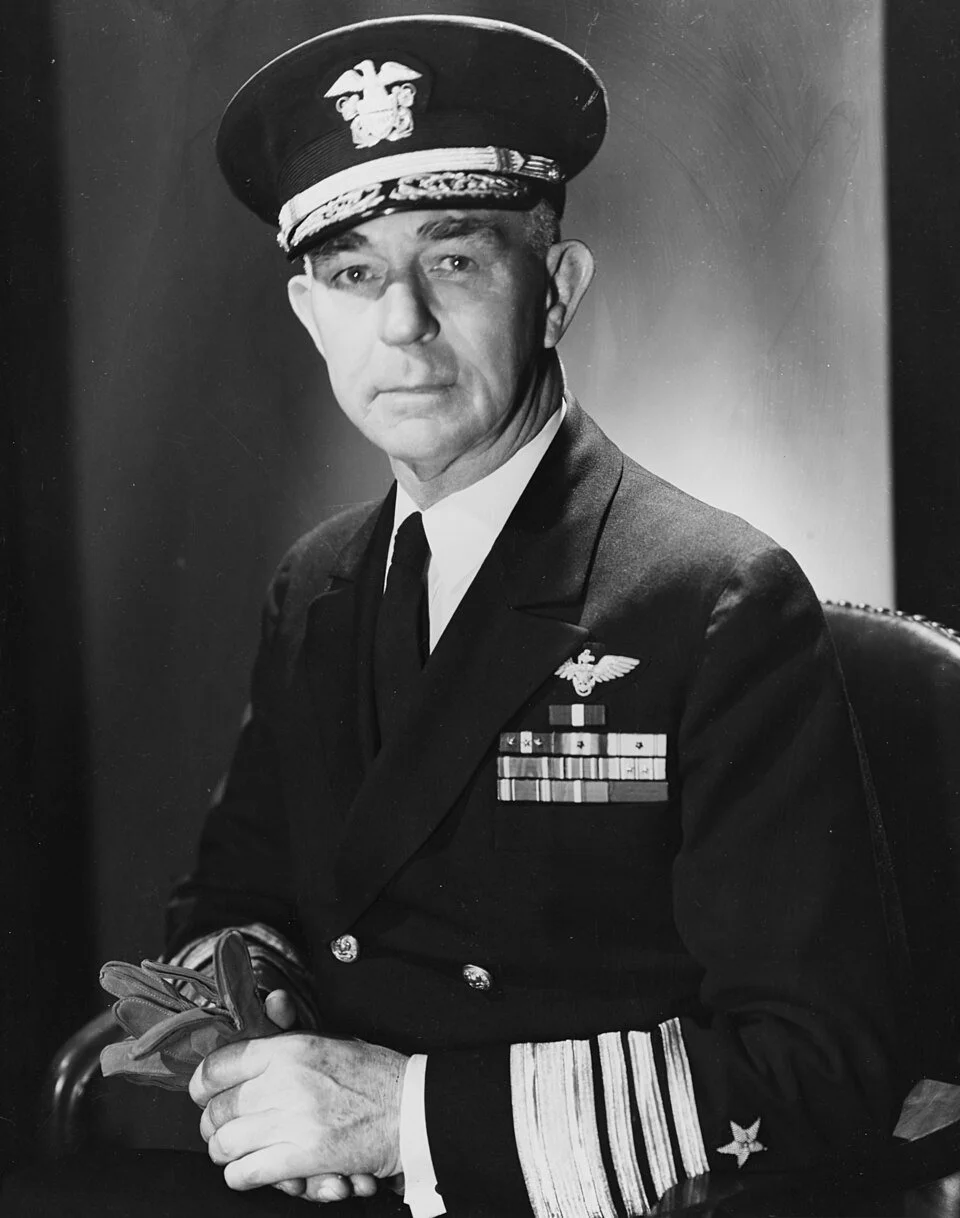
Admiral Richmond Kelly Turner, who had directed the amphibious landings at Guadalcanal, Iwo Jima, and Okinawa, spent his last years in uniform on diplomatic duty. He represented the US Navy on the United Nations Military Staff Committee, which was set up to advise the Security Council on military matters. He retired in 1947 with the rank of admiral.
Turner spent his retirement on California’s Monterey Peninsula. He died in Monterey on February 12, 1961, at age seventy-five. He was buried at Golden Gate National Cemetery in San Bruno, where his wartime colleagues Chester Nimitz and Raymond Spruance were later laid to rest nearby.
Ugaki Matome (1890-1945)
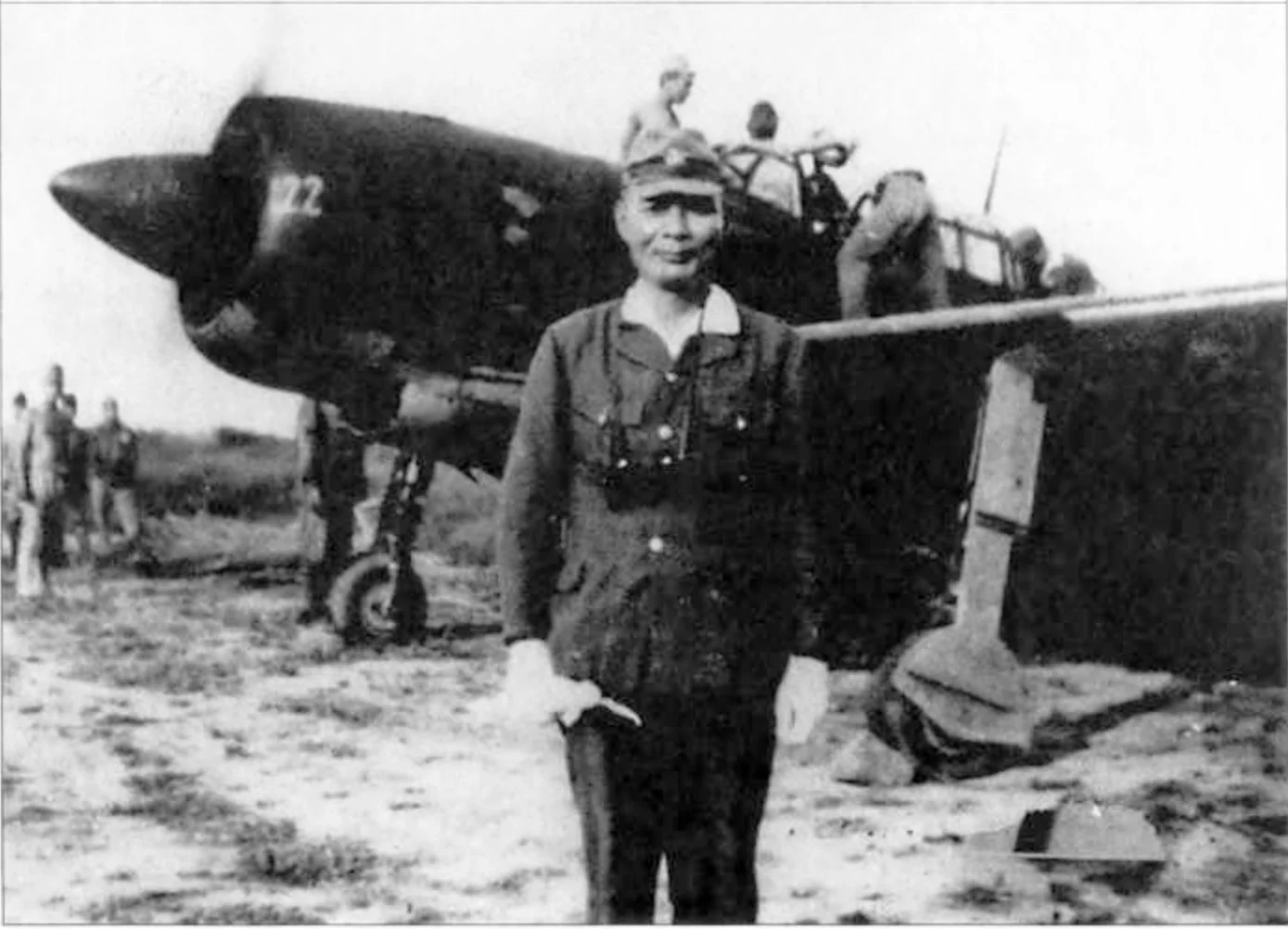
For Vice Admiral Ugaki Matome, there would be no postwar life. On August 15, 1945, after Emperor Hirohito broadcast Japan’s acceptance of surrender, the commander of the Fifth Air Fleet prepared for one final suicide mission. Having sent so many airmen to their deaths, he now intended to follow them. That evening, eleven dive bombers departed Oita for the waters off Okinawa. Ugaki rode aboard one of them, exchanging the command post for a place in the attack he had ordered.
Three aircraft returned with mechanical problems. Ugaki’s did not. A final radio message transmitted from his aircraft reported that it was beginning a dive on an American ship, but American records confirmed no successful attack by his formation. The precise circumstances of his death remain uncertain. Japan had accepted defeat; Ugaki, a man who had been at the center of some of the most pivotal engagements of the war, from surviving being shot down during the assassination mission against Yamamoto, to commanding the world’s largest battleship Yamato in the biggest naval engagement in history at Leyte Gulf, nevertheless carried his own war—and the airmen who accompanied him—into its final, futile hours.
Above is the forlorn admiral’s final photo before climbing into the Kamikaze plane behind him and heading off to his doom.
Yhara Hiromichi (1902-1981)
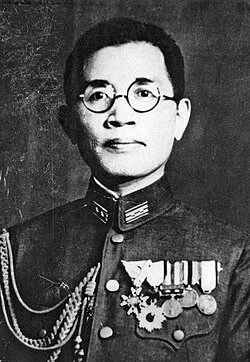
In the final days of the Battle of Okinawa, Lieutenant General Ushijima ordered Colonel Yahara, his senior operations officer, to stay alive. Yahara slipped out of the Japanese lines disguised as a civilian, but American forces eventually captured him. The most senior officer of Japan’s Thirty-second Army to survive the battle, he returned to mainland Japan in 1946 and earned a living farming and selling textiles.
In 1973, Yahara published his account of Okinawa, describing the arguments within the Japanese command over whether to stay in prepared defenses or launch counterattacks. He died in his hometown of Yonago on May 7, 1981, at age seventy-eight. His memoir appeared in English in 1995 as The Battle for Okinawa, with commentary by Frank Gibney, who had helped interrogate him in 1945.
Yamashita Tomoyuki (1885-1946)
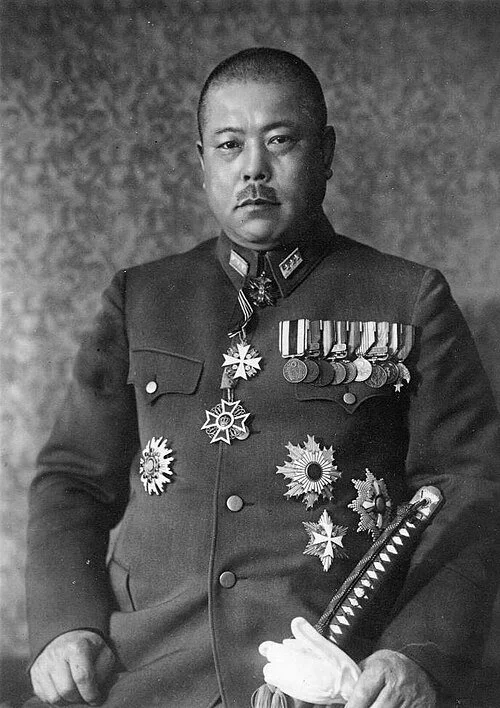
On September 2, 1945, the same day Japan signed the surrender aboard the USS Missouri, General Tomoyuki Yamashita came down from the mountains of northern Luzon and surrendered to the U.S. Sixth Army at Kiangan. He signed the formal surrender the next day at Camp John Hay in Baguio. Within weeks, the man once known as the “Tiger of Malaya” faced an American military commission in Manila, charged with failing to control Japanese forces that committed widespread atrocities against Filipino civilians and Allied prisoners of war.
Yamashita’s lawyers argued that he had been unaware of the crimes and that the collapse of his communications had left him unable to control scattered units. The commission found him guilty and sentenced him to death. The U.S. Supreme Court rejected his challenge to the commission’s authority in a 6–2 decision, and General Douglas MacArthur, in an act some consider callous vindictiveness towards the man he personally blamed for the suffering his beloved Philippines endured, confirmed the sentence. Yamashita was hanged at a prison camp south of Manila on February 23, 1946. His case became a landmark in the law of command responsibility, which can hold commanders accountable for failing to prevent crimes committed by their troops.